
Overview of dental implants
Lost a tooth and wondering if it’s finally time for dentures? If so, we recommend implant treatment. An implant restores not only the look of a lost tooth but also a bite and function like a natural tooth’s. Also called a “second permanent tooth,” it has drawn a lot of attention. There’s no daily maintenance hassle at all, and unlike a bridge, it puts no strain on the healthy teeth around it.
Benefits of implant treatment
-
Restored function
You can expect to regain enough chewing ability to bite into even hard foods. Being able to chew well is very important for your health, including brain stimulation and emotional stability.
-
Restored sensation
Dentures and bridges often feel unnatural, but an implant bites and feels close to your own teeth, so you can enjoy your meals.
-
No tooth decay
Tooth decay happens when acid made by decay-causing bacteria dissolves the enamel. An implant is made of durable material, so it can’t get cavities.
-
Natural, attractive appearance
It looks natural enough that you can hardly tell which tooth is the implant. The difference from a gap where a tooth is missing is obvious.
-
Low maintenance
All it needs is your usual brushing and oral care. Unlike dentures, there’s no taking it out or disinfecting it, so hygiene isn’t a concern either.
-
No effect on healthy teeth
Bridges and dentures put strain on your remaining teeth. An implant is confined to the site of the missing tooth, so it puts no strain on your other teeth.
Drawbacks of implant treatment
-
Requires surgery
It requires surgery, which puts a fair amount of strain on the body, so depending on your health, it may not be suitable.
-
Long treatment period
Besides the surgery, you’ll need several visits for extractions and other procedures, and the implant takes at least two months to bond with the bone, so treatment takes a long time to complete.
-
Costly
Implant treatment is not covered by public health insurance, so it is self-pay, and because surgery is involved, it is costly. You can use the medical expense deduction or a dental loan.
-
Maintenance
Getting the implant isn’t the end of treatment. Regular maintenance is the most important part. You’ll need to come in regularly so we can check your bite and how well the implant has settled, and to prevent problems such as peri-implantitis.
-
Failure to bond with the bone
This can happen with any dentist, however skilled. Most cases come from strong force on the implant before it bonds with the bone, or from bacterial infection or smoking. But because it is an advanced procedure, in rare cases the implant’s position or damage during surgery keeps it from bonding with the bone, and it becomes loose or comes out. To avoid problems like this, trust your treatment to Hamille, with our extensive experience and track record.
-
Pain, swelling or numbness that does not go away
The cause is thought to be bacterial infection or pressure on a nerve, so it is important to be treated at a clinic with thorough infection control that can also provide advanced diagnostics such as CT scans.
Implant treatment process
The whole course of treatment takes around 3–7 months.
Consultation and treatment planning
After a full explanation and discussion, we put together the treatment plan that suits you best, taking everything into account.
Examination and diagnosis
An intraoral examination and X-ray.
First surgery
The implant is placed into the jawbone and the site is stitched closed (about as involved as an extraction). * If there is not enough bone to place the implant, bone grafting is needed first, which takes 6–8 months.
Stitch removal
The stitches are removed after about 1–2 weeks, and we check how healing is progressing.
Healing period
A healing period of about 2–6 months until the implant and bone are integrated. * This varies from person to person.
Follow-up checks
Please come in regularly so we can check how the surgical site is healing.
Second surgery
The abutment (post) is fitted, followed by a healing period of about 1–6 weeks.
Making and fitting the crown
Once healed, we take an impression, have a crown custom-made in the shape and color that suits you best, and fit it onto the implant.
* The whole course of treatment takes around 3–7 months.
Cost and insurance for implant treatment
Implant treatment is not covered by public health insurance. You can use the medical expense deduction or a dental loan.
Basic cost
CT scan, examination and diagnosis = free
First-stage implant placement surgery = ¥220,000
Second-stage placement surgery + crown = ¥220,000
The costs below are additional charges that may be needed depending on the condition of your mouth. For a diagnosis and a quote, please come in for a free examination first.
GBR (guided bone regeneration)
Insufficient bone thickness or height = ¥55,000 (small) / ¥110,000 (large)
Artificial membrane to guide bone regeneration = ¥55,000
Sinus lift procedures
Upper jawbone too thin to place an implant = socket lift ¥77,000
Upper jawbone much too thin to place an implant = sinus lift ¥220,000
Other
Intermediate abutment = ¥33,000
Surgical guide = ¥55,000 *custom-made, at actual cost
Blueprint = ¥22,000
Provisional restoration = ¥26,400
Mock-up set (laminate veneer) = ¥132,000
Risks and side effects of implant treatment
Risks from human error
Damage to nerves or blood vessels, nerve paralysis, drilling through into a cavity in the skull and causing inflammation, or the implant failing to bond and becoming loose or coming out
- Cause 1: The treatment plan was not based on precise, advanced CT examination and diagnosis
- Countermeasure 1
First, check whether the clinic has a CT scanner. Also discuss with your dentist whether the bone is thick enough and the right shape, and whether an implant of enough length can be placed. Make sure the risks at each treatment site are explained to you, and go ahead only once you are comfortable with the treatment. Lower jaw: A large nerve runs through the mandibular canal, so the drilling for the implant must avoid the mental foramen (where the nerve and blood vessels exit) and must not damage nerves or blood vessels. Upper jaw: Drilling through into the cavity called the maxillary sinus damages the sinus lining and causes sinusitis, with symptoms such as a stuffy nose, pus discharge, pain under the eyes and a heavy feeling in the head. To keep the implant from entering the sinus, bone density and any lack of bone volume must be assessed in detail.
- Cause 2: A dentist’s lack of experience or skill can lead to errors in the position or angle of the implant, and too little water cooling during drilling can leave the bone in a burn-like state. The implant then fails to bond and becomes loose or falls out early.
- Countermeasure 2
It’s important to be treated by an experienced, skilled dentist. This can be hard to judge, but choose a dentist who gives you a clear explanation of things such as how many cases they handle a year and what the risks are, and whom you feel you can trust. In more than 30 years of treatment, our clinic has had no accidents caused by this kind of human error.
Risk of loss (causes other than human error)
An implant should let you chew well once it bonds with the bone, but sometimes it does not bond and becomes loose or comes out.
- Cause 1: There are various causes, such as strong force from grinding or clenching before the implant bonds with the bone, smoking, or bacterial infection.
- Countermeasure 1
If the implant comes out because it did not bond, we redo the surgery free of charge. We also offer a 10-year warranty. Be sure to check whether a clinic offers this kind of post-treatment warranty.
- Cause 2: Bacterial infection from neglecting home care or regular maintenance. This leads to peri-implantitis, and the surrounding bone dissolves little by little until the implant comes out.
- Countermeasure 2
Treatment doesn’t end once the implant is placed. An implant can’t get cavities, but if your mouth is not kept clean, the area around it becomes inflamed. An implant is worth looking after: to make it last, home care and regular maintenance at the dentist are very important. Choose a clinic that gives a clear explanation of this aftercare before treatment and that you can keep visiting.
Appearance risk (mainly in front teeth)
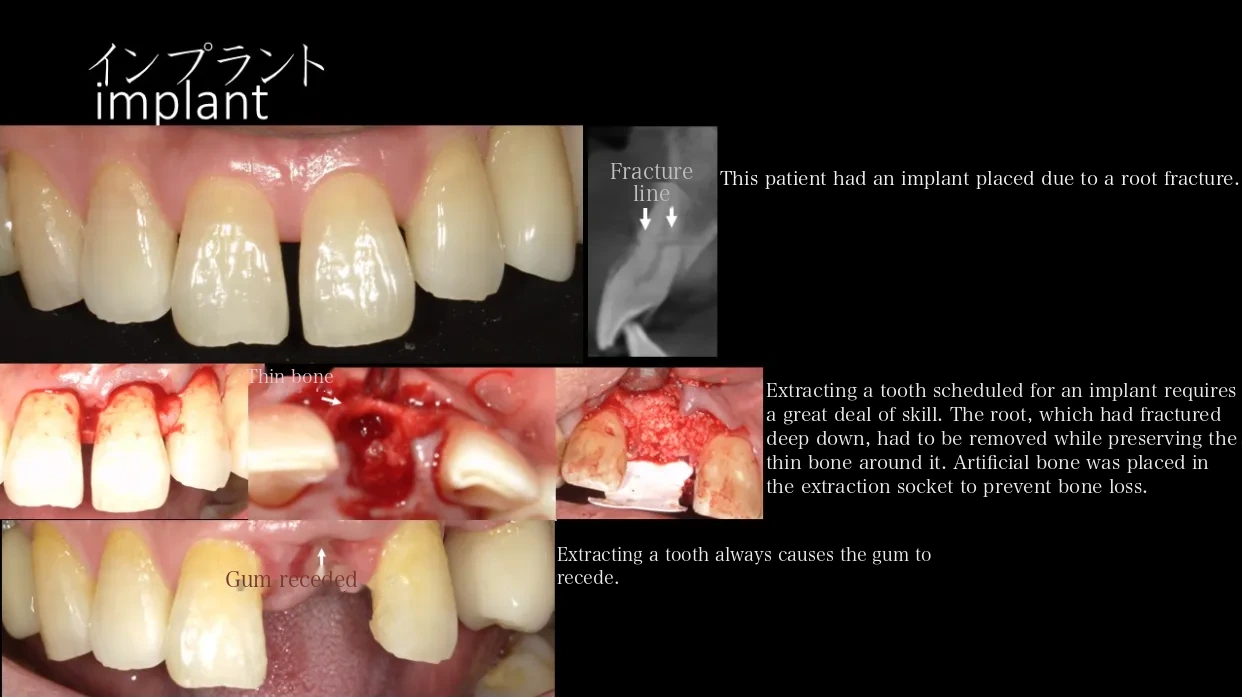
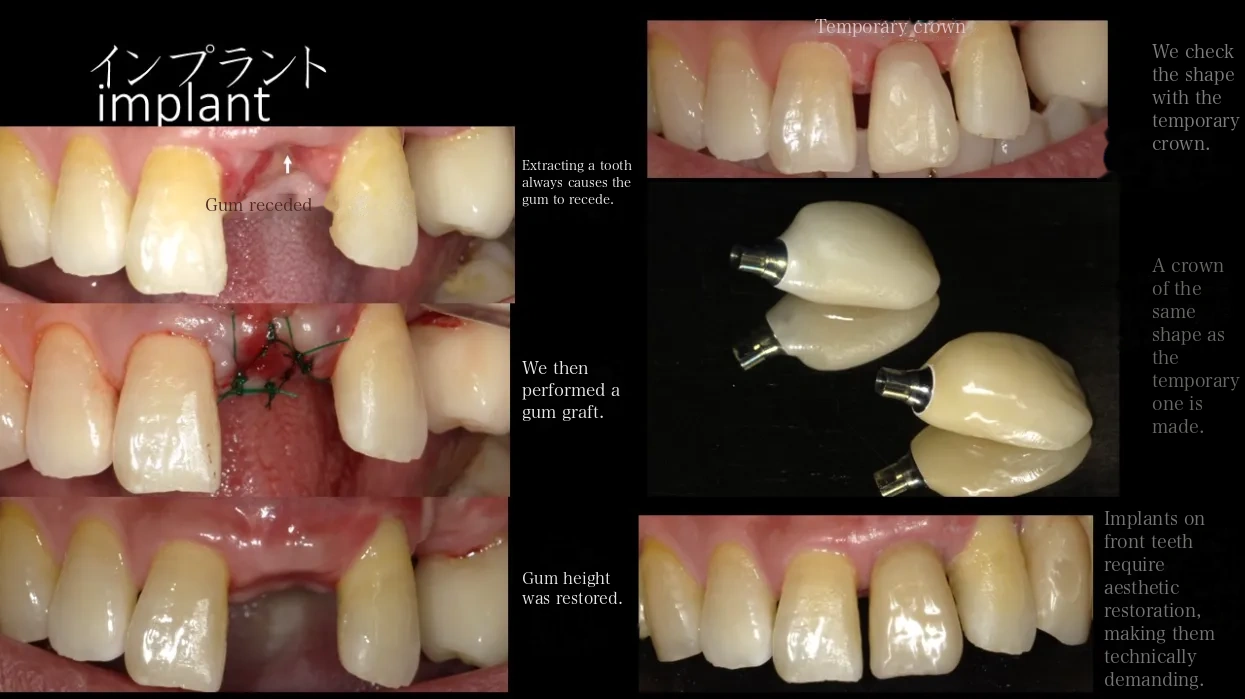
The implanted tooth can look longer than the others, or the metal root can show through and look dark.
- Cause 1: The gums can recede from brushing or peri-implantitis and make the implant noticeable. This can also happen when the bone or gums are not thick enough.
- Countermeasure 1
Don’t brush too hard, keep up good care at home, and see your dentist regularly to keep your mouth clean. If thin bone or gums are the cause, we graft enough bone and gum tissue for the implant.
Other
○Please avoid implant treatment during pregnancy, if you may be pregnant, or while breastfeeding.
○Because surgery places a strain on the body, this treatment may not be suitable depending on health conditions such as heart disease, diabetes or osteoporosis. If you are taking blood pressure medication or blood thinners, please be sure to tell us.
○Depending on how clean your mouth is, you may first need to change daily habits or have treatment to get your mouth clean.
○You may have pain, swelling, bruising, an unusual sensation or bleeding after surgery, but in most cases this settles within a few days.
○If you have any of the following underlying conditions, please consult your dentist beforehand
: circulatory conditions (ischemic heart disease, hypertension, congenital heart disease, infective endocarditis, etc.), respiratory conditions (bronchial asthma, aspirin-induced asthma, chronic obstructive pulmonary disease, etc.), digestive conditions (liver dysfunction, kidney dysfunction, gastric or duodenal ulcer, etc.), metabolic and endocrine conditions (diabetes, osteoporosis, hyperthyroidism, hypothyroidism, adrenal disorders, etc.), psychiatric conditions (schizophrenia, depression, etc.), cerebrovascular disease (cerebral infarction, cerebral hemorrhage, etc.), autoimmune conditions (rheumatoid arthritis, systemic lupus erythematosus, etc.), allergic conditions (metal allergy, drug allergy), specific infections (HBV, HCV, HIV, etc.), medication-related concerns (patients on bisphosphonates, steroids or antithrombotic therapy, etc.), and patients with a history of head and neck cancer or radiation therapy
○Other possible complications include neurogenic shock, hyperventilation syndrome, local anesthetic toxicity, local anesthetic allergy, altered sensation, subcutaneous bleeding, swelling and pain.
Aftercare following implant treatment
Aftercare starts with brushing every day. Along with a toothbrush, use interdental brushes, floss and similar tools; keeping the area clean is very important.
We recommend a checkup every 3 months, where we clean professionally and check on the implant site.
We also offer a 10-year warranty, so if a problem does occur, we cover it according to how many years have passed. Regular checkups are one of the warranty conditions, so keep your mouth healthy and make your implant last for years to come.
Success rate and track record of implant treatment
With this many risks, many people may wonder whether they should avoid implants. But these drawbacks come mainly from lack of skill or poor hygiene, and as long as you keep up proper maintenance, the 10–15-year survival rate is quite high, at about 90%. The survival period is expected to grow longer as more years pass, and it’s fair to say an implant can be used almost permanently. The benefits outweigh the drawbacks. Many people worry, but our clinic places about 100 or more implants a year and has kept a 100% success rate for over 30 years.
Implant FAQ
- QWhat is a dental implant?
- AWhen a tooth is lost, an implant (an artificial tooth root) is embedded in place of the root, and a crown is attached to it. An artificial device placed in the body is called an “implant”; in dentistry, the term refers to a dental implant.
- QWhat are the benefits of implant treatment?
- AImplant treatment is the only treatment that can restore the function of a missing tooth without sacrificing any of your remaining teeth.
- QDoes implant treatment hurt?
- AWe use anesthesia during surgery, so you won’t feel pain. You may have some pain for a few days after the anesthesia wears off.
- QHow long does the surgery take?
- ASurgery takes around 60 minutes per implant. This can vary depending on the treatment, so please check with your dentist.
- QHow long does an implant last?
- AGenerally around 10–15 years, but this can be shorter if aftercare is neglected, or as long as 20–30 years with proper aftercare.
- QI smoke. Can I still have implant treatment?
- AIt is possible, but smokers face a higher risk than non-smokers. You will need to stop smoking for at least a week after surgery.
- QI was turned down for implants because of insufficient bone. Can I still have implant treatment?
- AGuided bone regeneration (GBR) or a sinus lift procedure can sometimes still make implant surgery possible. Please come in for an examination first.
- QI have a metal allergy. Can I still have implant treatment?
- AImplants are made of titanium, so unless you have a titanium allergy, you can have the surgery. Please discuss this with your dentist beforehand.
- QI have an underlying condition. Can I still have implant treatment?
- AThe risk is higher, so whether treatment is possible depends on how stable your condition is and the state of your mouth. Please discuss this with your dentist beforehand.
- QCan I claim the medical expense deduction?
- AImplant treatment qualifies for the medical expense deduction, and claiming it can refund part of the income tax you have paid. The amount depends on your income.
Case studies of implant treatment
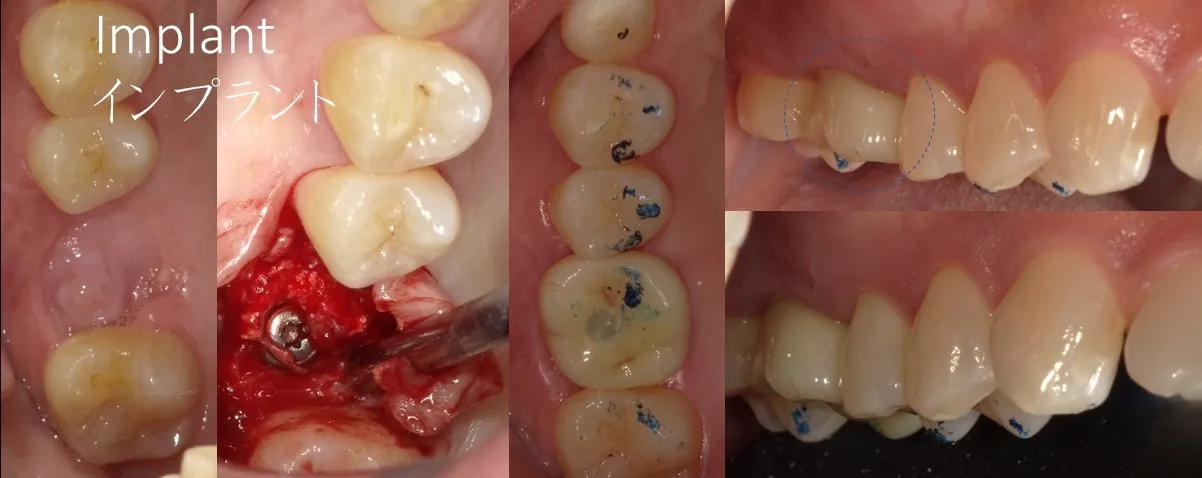
Implant case 1
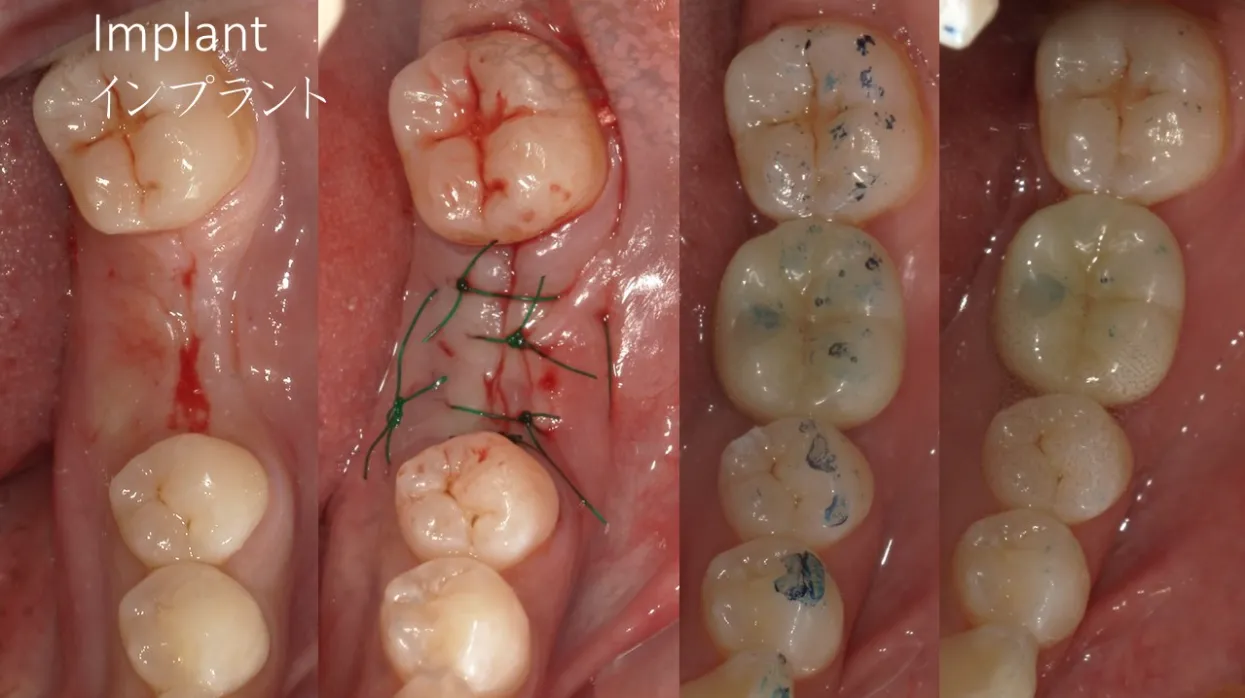
This patient’s tooth fractured and had to be extracted. They wanted to be able to chew properly, so we treated it with an implant. It is the second tooth from the back. There was also little bone, so we placed bone graft material to restore the original bone shape before treatment.