


What is preventive dentistry?
It’s a way to prevent tooth decay and periodontal disease and keep your teeth healthy for life.
A dental clinic in Kanda-Ogawamachi and Ochanomizu | Hamille Tokyo Ogawamachi
Features of preventive dentistry
Professional care
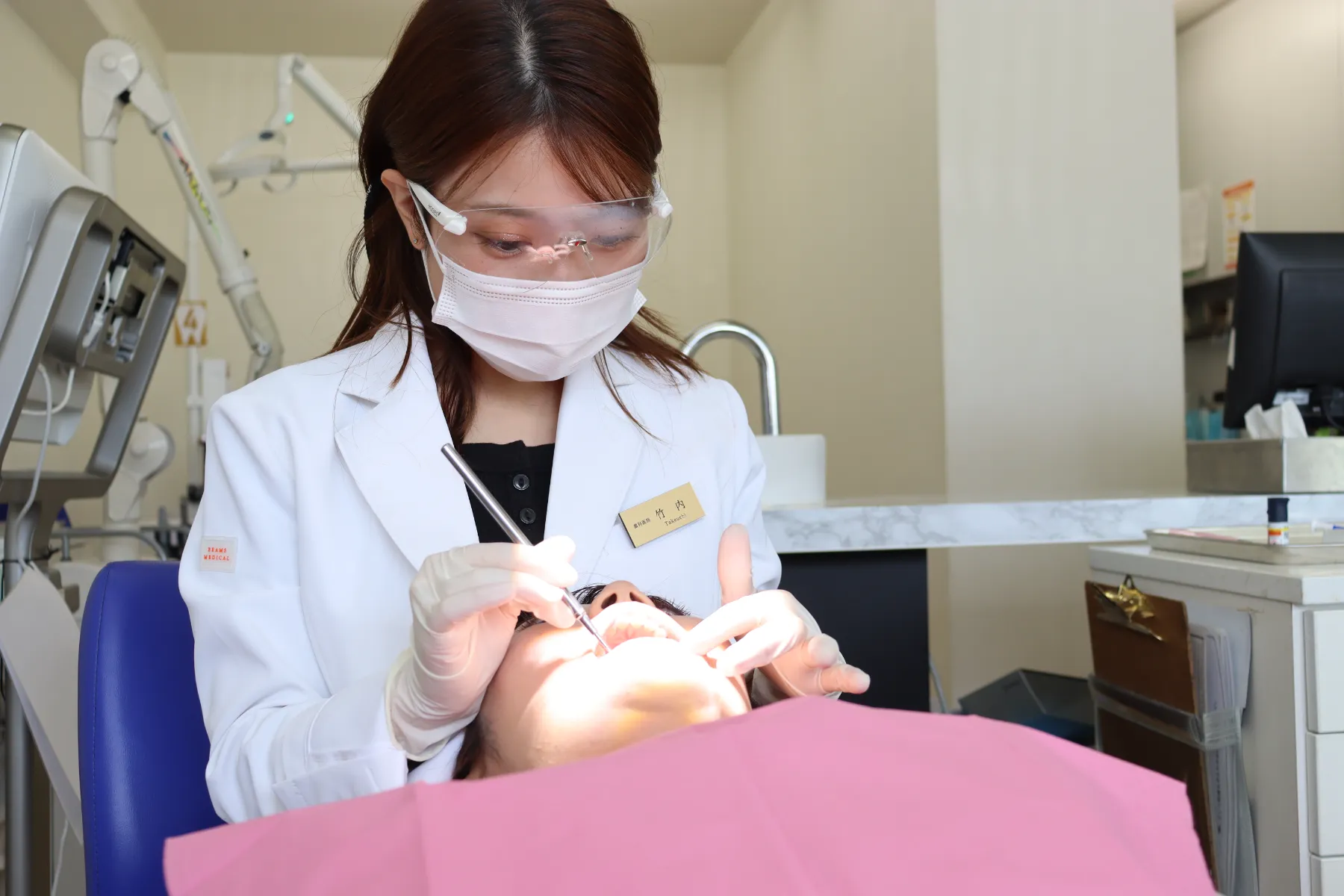
Professional care is care provided at a dental clinic. It mainly consists of cleaning the areas that self-care can’t reach and brushing guidance.
Tooth decay and periodontal disease are also said to be lifestyle-related diseases. Every patient’s mouth and lifestyle are different, so we give advice and brushing guidance suited to each person. For early detection and treatment, we recommend professional care at a dental clinic about 3–4 times a year.
A dental clinic in Kanda-Ogawamachi and Ochanomizu | Hamille Tokyo Ogawamachi
Care at the dental clinic
Step1.
Oral examination
We check your teeth and gums, and take photos inside your mouth to explain what we find.
Step2.
Scaling
We remove tartar using specialized equipment and instruments.
Step3.
PMTC
We clean your teeth with specialized equipment and instruments, removing plaque and biofilm.
Step4.
Brushing guidance
We teach each patient the correct self-care method for the condition of their mouth.
Step5.
Fluoride application
Applying high-concentration fluoride to the teeth to prevent tooth decay
A dental clinic in Kanda-Ogawamachi and Ochanomizu | Hamille Tokyo Ogawamachi
Oral examination
-
Oral examination and diagnosis
We examine the current condition of your mouth.
・Type and fit of crowns and fillings
・Any tooth decay and how far it has progressed
・How loose the teeth are
Oral hygiene check
・Plaque and tartar buildup, and how strong any bad breath is
The condition of the tongue, cheeks and other parts of the mouth besides the teeth -
Periodontal disease (gums) examination
We check for gum disease and how far it has progressed.
・Measuring the depth of the periodontal pockets
・Checking whether blood or pus comes from the gums -
X-ray imaging
We examine areas you can’t see with the naked eye.
・How far periodontal disease has progressed, and how well treatment is working
・Condition of the bone that supports the teeth
・Condition of the bite -
Intraoral photography
We photograph and record the current condition of your mouth.
This lets you see parts of your mouth you don’t get to see day to day.
Scaling (tartar removal)
In treating periodontal disease and tooth decay, the most important thing is thorough plaque removal. But the surface of tartar (calcified plaque) is rough, so plaque sticks to it and is hard to remove once it does.
Scaling helps prevent tooth decay and periodontal disease and improves the condition of your mouth. Daily brushing alone can’t remove tartar, and more than 90% of people have it.
Even after it’s removed, it forms again over time, so it needs to be removed at a dental clinic on a regular basis. Cleaning (scaling) is usually done about once every 3–6 months. (The interval depends on the condition of your mouth.) Along with scaling at the dental clinic, your own self-care is also important.
PMTC
PMTC = Professional Mechanical Tooth Cleaning
A dental hygienist uses specialized cleaning equipment and instruments to remove the plaque, tartar (calcified plaque) and biofilm that cause tooth decay and periodontal disease, then polishes the tooth surfaces smooth so plaque is less likely to stick.
It removes plaque from areas that are hard to clean completely on your own and from areas you shouldn’t brush, and it also removes stains that a toothbrush can’t. So apart from prevention, we also recommend it for improving the look of your teeth.
Self-care
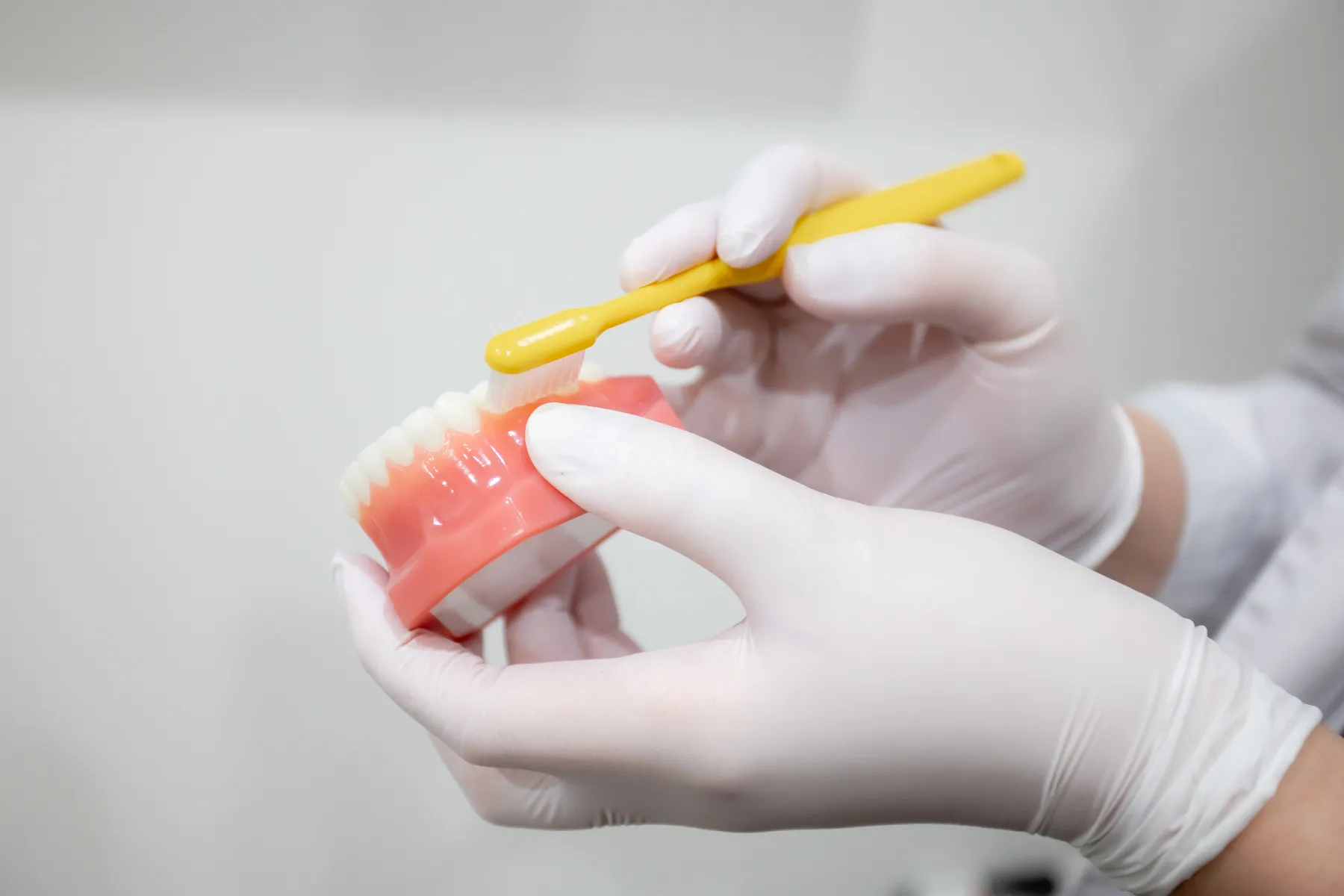
Self-care means putting the brushing guidance and other advice you received from a dental hygienist into practice yourself, every day. If you neglect your own care after receiving professional care, the professional care is wasted. Consistent daily care is what protects healthy teeth over the long term.
Combining professional care and self-care makes a big difference. It’s important to care for your teeth every day, using the right method for you. Learn the key points of prevention at the dental clinic and make correct self-care a habit.
Key points of self-care
-
Leave fluoride in your mouth
Brush with fluoride toothpaste, spreading it around your whole mouth. Afterward, one rinse with a small amount of water for about 5 seconds is enough.
-
Remove all the plaque
Plaque is a mass of bacteria that sticks to the tooth surface and multiplies. At first, it’s fine to use a mirror. Check that no plaque is left and that you haven’t missed any spots.
-
Keep bacteria from multiplying
When bacteria multiply in your mouth, they form plaque and tartar, which lead to problems such as tooth decay and periodontal disease. Use a variety of oral care products to keep bacteria from multiplying.
A dental clinic in Kanda-Ogawamachi and Ochanomizu | Hamille Tokyo Ogawamachi
Oral checkup and cleaning process
Appointment
Please make an appointment using the booking form.
Oral check by a dentist or dental hygienist
First, we talk with you about your daily care and what you do for prevention, and ask about any worries or concerns. We then examine your mouth to check how well you’re brushing and whether you have any tooth decay. * If we find tooth decay, we’ll treat it first.
Care guidance and cleaning by a dental hygienist
After the check, a dental hygienist gives guidance on brushing and eating habits suited to the condition of each patient’s mouth. We then clean your teeth, removing the small deposits your daily brushing missed.
Maintenance
Please come in once every few months, and we’ll repeat Steps 1 and 2. The condition of your mouth changes from day to day. Adjust your self-care to what we find at each checkup to keep your mouth in good condition.